



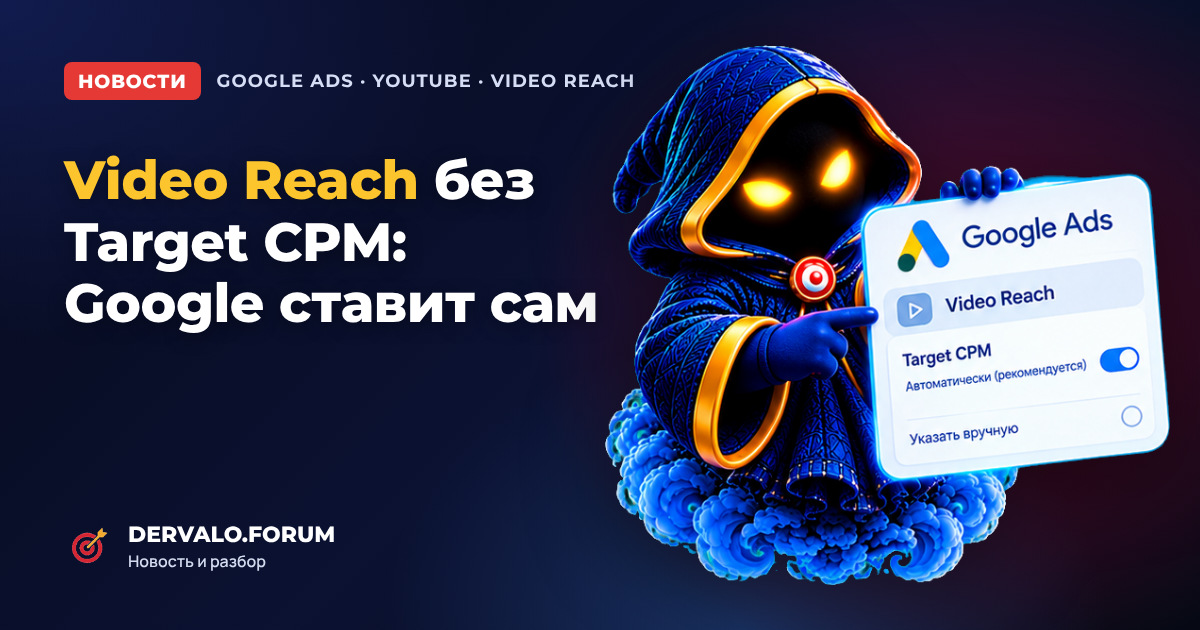
Google Ads has launched a beta of automated bidding for YouTube Video Reach campaigns. You can now create a campaign without entering a Target CPM at all: Google sets the bid in every auction to spend the full budget and get as much reach as possible. The change was spotted on October 12, and the feature isn't available in every account yet.
How bidding works now
New Video Reach campaigns have two modes:
- Automated bidding (default). You leave the bid field empty. Google sets and adjusts the bid in each auction to spend the whole budget with maximum reach.
- Target CPM (optional). You tick "Set a target" and enter your target cost per thousand impressions. The system tries to get as many impressions as possible while keeping the average CPM at or below that level.
You can switch between modes after launch too: in ad group settings, right in the bid table or when copying campaigns. In reports, automated campaigns show "Automated" in the Target CPM column instead of an amount.

Where it works
- Campaign subtypes: Efficient reach, Non-skippable and Target frequency.
- Networks: YouTube, Google video partners and Google TV.
- Budgets: daily budgets and campaign total budgets.
- Not available for Video views campaigns.
One more requirement: the video creative has to be added before the campaign is created. If you don't see the new option, your account isn't in the beta and you'll have to set the bid manually as before.
The catch: CPM can spike
Automated bidding is built to spend the full budget first, not to hold the price. Google's help page warns directly: a large budget on a narrow audience will push the average CPM up. The system has nowhere else to put the money, so it starts outbidding.
Keep the budget proportional to the audience and don't judge results by CPM alone. For reach campaigns, unique reach and frequency matter more: 100,000 impressions on the same people are worse than 70,000 on different ones.
What media buyers should do
- New audience or geo. If you don't know what a normal CPM looks like there, run a test on automated bidding. It's a quick way to find the market price of an impression.
- You have a working CPM. If you already know your price and run tight unit economics, stay on Target CPM. Google itself recommends this.
- Leave the campaign alone for the first 24 hours. The system needs time to learn. Major budget and audience changes in the first day throw the algorithm off.
- Compare fairly. Run two identical campaigns, one on automated bidding and one on Target CPM, and look at reach, frequency and CPM over several days, not one lucky day.
Google keeps handing more decisions to its algorithms: first audiences and creatives, now bids in reach video. There's no date for a full rollout yet, and details may change before the feature leaves beta.